
Life can get busy – whether you’re juggling work, family, or making time for self-care. That’s why it’s important to check in on how you’re fuelling your body, especially when it comes to protein.
Protein isn’t just a trend or something for athletes – it’s a key part of staying energized, strong, and well-nourished at every stage of life. From supporting muscle health to powering your immune system and helping your body recover, protein plays a vital role in how you feel and function every day.
In my practice, I often see clients who are unintentionally falling short on protein. This is especially common among vegetarians, older adults, and individuals whose cultural eating patterns may include fewer animal-based foods. The good news? With a little awareness and some simple strategies, it’s entirely possible to meet your needs in a way that feels natural and sustainable.
If you’ve ever wondered how much protein you need, whether you’re getting enough, or how to include more in a way that works for your lifestyle – keep reading.

Why All the Hype?
You’ve probably noticed the word “protein” popping up everywhere – from snack bars to social media to gym ads. But behind the trend lies some solid science.
Protein is essential for:
- Building and repairing muscles, bones, skin, and other tissues
- Supporting your immune system to fight infections
- Producing hormones and enzymes that keep your body functioning
- Maintaining healthy skin, hair, and nails
Unlike carbohydrates and fats, your body doesn’t store protein – so you need a steady supply through food. As more people focus on staying active, aging well, and eating mindfully, protein has become a bigger focus in daily eating patterns.
Do We Really Need It? And How Much?
Absolutely. Protein is one of the three main macronutrients your body needs in relatively large amounts every day.
Health Canada recommends 0.8 grams of protein per kilogram of body weight for most healthy adults. Your needs might be higher if you’re:
- Pregnant or breastfeeding
- Very physically active
- An older adult trying to prevent muscle loss
- Recovering from surgery or illness
Why Protein Matters
Protein does more than help with muscle tone. It’s a multitasker your body relies on every single day. Here’s a closer look at what it does.
- Tissue growth and repair – including muscles, bones, skin, and vital organs
- Immune system support – proteins form antibodies and immune cells that help fight infections
- Enzyme and hormone production – many enzymes and hormones (like insulin) are made from protein and regulate countless body processes
- Nutrient transport and storage – proteins help carry oxygen (via hemoglobin), and other nutrients such as iron, zinc, and fat-soluble vitamins (A, D, E, and K) throughout the body
- Energy backup – while not its main job, protein can be used by the body for energy when your intake of carbohydrates and fats is too low
What Happens If You Don’t Get Enough?
While severe protein deficiency is uncommon in Canada, low or marginal intake over time can still have important health effects – especially for older adults, those recovering from illness or injury, or people following restrictive or unbalanced diets.
Potential impacts of low protein intake:
- Muscle loss and weakness (sarcopenia) – the body begins to break down muscle for energy, reducing strength, balance, and mobility
- Weakened immune response – you may get sick more often or take longer to recover
- Slower healing – wounds, infections, and surgeries may take longer to recover from
- Fatigue and brain fog – without enough protein, energy levels and mental clarity may dip
- Nutrient transport issues – your body may have trouble absorbing and distributing key nutrients
- Swelling (edema) – in certain conditions such as liver disease or severe malnutrition, low protein levels may contribute to fluid buildup. If you’re managing a health condition that affects your protein needs, personalized guidance from a Registered Dietitian is strongly recommended
- Delayed growth and development in children – protein is crucial for both brain and body development
Even small, consistent gaps in protein intake can add up over time – particularly if overall nutrition or calorie intake is also low.
Who Might Be Falling Short?
While data shows that many Canadians are meeting their protein needs, that doesn’t always reflect what’s happening on an individual level. In real-life settings, I see plenty of people who aren’t quite hitting the mark – especially at breakfast or during busy days where meals are rushed or skipped.
It can feel more challenging to meet your protein needs if:
- You’re an older adult with reduced appetite or difficulty chewing
- You follow a vegetarian or vegan diet without careful planning
- You’re recovering from illness or injury, which increases your protein needs
- You follow traditional or cultural diets that may include smaller amounts or irregular intake of protein-rich foods
Where to Get Protein?
It doesn’t have to be challenging. Let’s see how to get enough – without the stress.
For most people, it’s usually not necessary to track grams of protein or buy supplements. A practical way to meet your daily needs is to include a source of protein at each meal and snack.
Did you know that protein is found in a variety of plant and animal foods? So whether you prefer a vegan, vegetarian, or non-vegetarian diet, it’s usually possible to meet your needs with food. Here are some examples of protein-rich options:
Animal-Based:
- Chicken, turkey, lean beef
- Fish (like salmon and tuna)
- Eggs
- Milk, Greek yogurt, cottage cheese, cheese
Vegetarian-Friendly:
- Eggs, milk, Greek yogurt, cottage cheese
- Tofu, tempeh
- Lentils, beans, chickpeas
- Quinoa, nuts, seeds
Vegan:
- Tofu, tempeh, edamame
- Lentils, black beans, chickpeas
- Chia seeds, hemp seeds, pumpkin seeds
- Nut/seed butters
- Fortified soy or pea milk
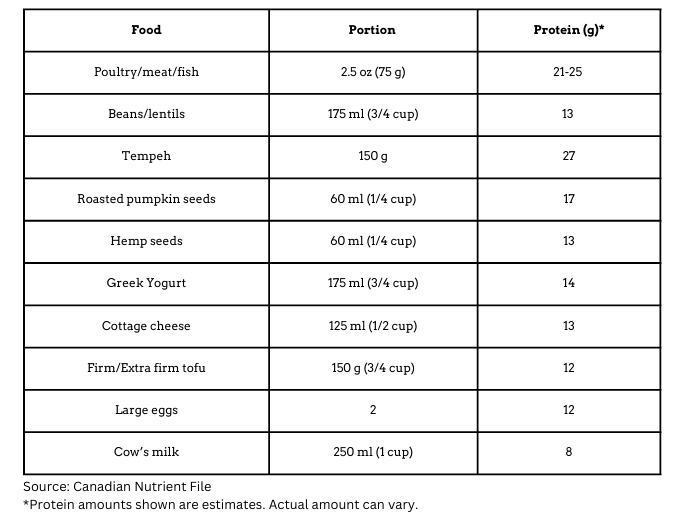
How Much Protein in Your Food?
Need Some Protein-Packed Meal Ideas?
Non-Vegetarian:
- Grilled salmon with quinoa and roasted vegetables
- Chicken and veggie stir-fry with brown rice
Vegetarian:
- Greek yogurt parfait with berries and hemp seeds
- Lentil and vegetable soup with whole grain bread
Vegan:
- Black bean and sweet potato tacos
- Tofu and veggie curry with brown rice
- Oat and chia pudding with almond butter and fruit
Snack Ideas:
- Hummus with raw veggies
- Roasted chickpeas
- Trail mix
- Edamame
- Smoothie with soy milk and nut butter
- Hard boiled eggs
- Greek yogurt
Can You Get Too Much Protein?
Most people don’t need to worry about overdoing it – but more isn’t always better. Very high protein intake, especially from animal sources or supplements, may:
- Worsen kidney function in people with pre-existing kidney conditions
- Crowd out other essential food groups like fruits, vegetables, and whole grains
- Increase intake of saturated fats and processed meats, which can raise other health risks
There’s no official upper limit for protein in healthy individuals, but moderation and variety are key.
Your Takeaway
Protein isn’t just for athletes or bodybuilders – it’s something we all need, every day. Whether you eat meat or follow a plant-based diet, there are plenty of delicious and accessible ways to meet your needs.
If you’re unsure whether you’re getting enough, or want help tailoring your intake to your age, health goals, or cultural preferences, don’t hesitate to reach out. A Registered Dietitian can support you with a plan that’s realistic and sustainable.
Nutrition trends come and go, but what matters most is finding a way of eating that feels good and works for you. Let’s connect and make protein work for you!
 Nourish to Thrive RD