
Healthy Summer Eating with Kids at Home
Summer break often means more snack requests, more meals to make, and constant cleanup. If that sounds familiar, you’re definitely not alone.
With the kids home and schedules a bit looser, it’s normal for things to feel a little chaotic in the kitchen. Eating well this summer doesn’t have to be stressful. A few simple strategies can make meals feel more manageable and keep your family nourished through the season.
Here are a few simple strategies to help make your days feel a little more manageable:
1) Set a Simple Meal & Snack Routine
Having a structured (yet flexible) meal and snack schedule that works for your family can help the day feel more organized.
It helps kids stay fueled, regulates hunger, reduces constant grazing, and encourages them to come to the table feeling hungry – but not overly hungry.
Try to aim for 3 meals and 2–3 snacks for kids each day, with breaks in between (about 2–3 hours). Keep meal and snack times consistent if possible.
This helps:
- Avoid “I’m hungry” every 10 minutes
- Support better appetite and mood
- Keep mealtimes calmer and more predictable
This doesn’t apply only to kids – eating at regular intervals can support adults too. Most adults feel their best with balanced meals spaced about 4–6 hours apart, depending on their appetite and schedule. It can help maintain steady energy, avoid afternoon crashes, and reduce mindless snacking.
Easy but nourishing snack combos:
- Apple slices + peanut butter
- Whole grain crackers + cheese
- Yogurt + fruit
- Hummus + cucumbers or pita
- Smoothie popsicles
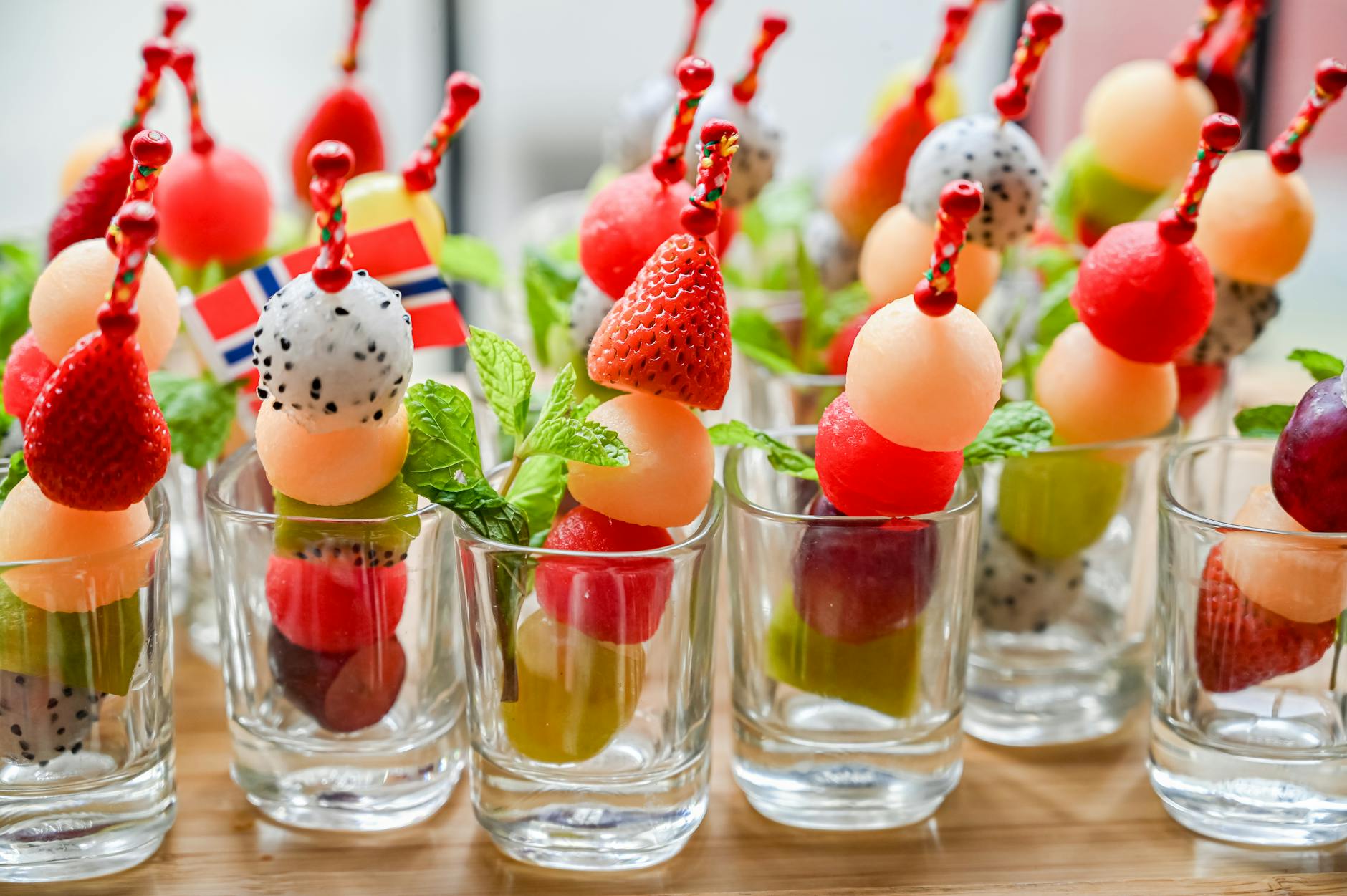
Tip: If your child skips one meal or doesn’t eat much, that’s okay. Try not to offer a “backup” meal right away – just stick with the routine.
2) Involve Kids in the Kitchen
Involving kids – even just a little – helps them become more interested in food, learn healthy habits, and feel more confident. It can also make them more likely to try new foods.
Depending on their age, kids can:
- Wash fruits and veggies
- Stir, scoop, or spread
- Help pack snacks for outings
- Cut soft fruits or veggies with a kid-safe knife
- Portion out snacks into containers or bags
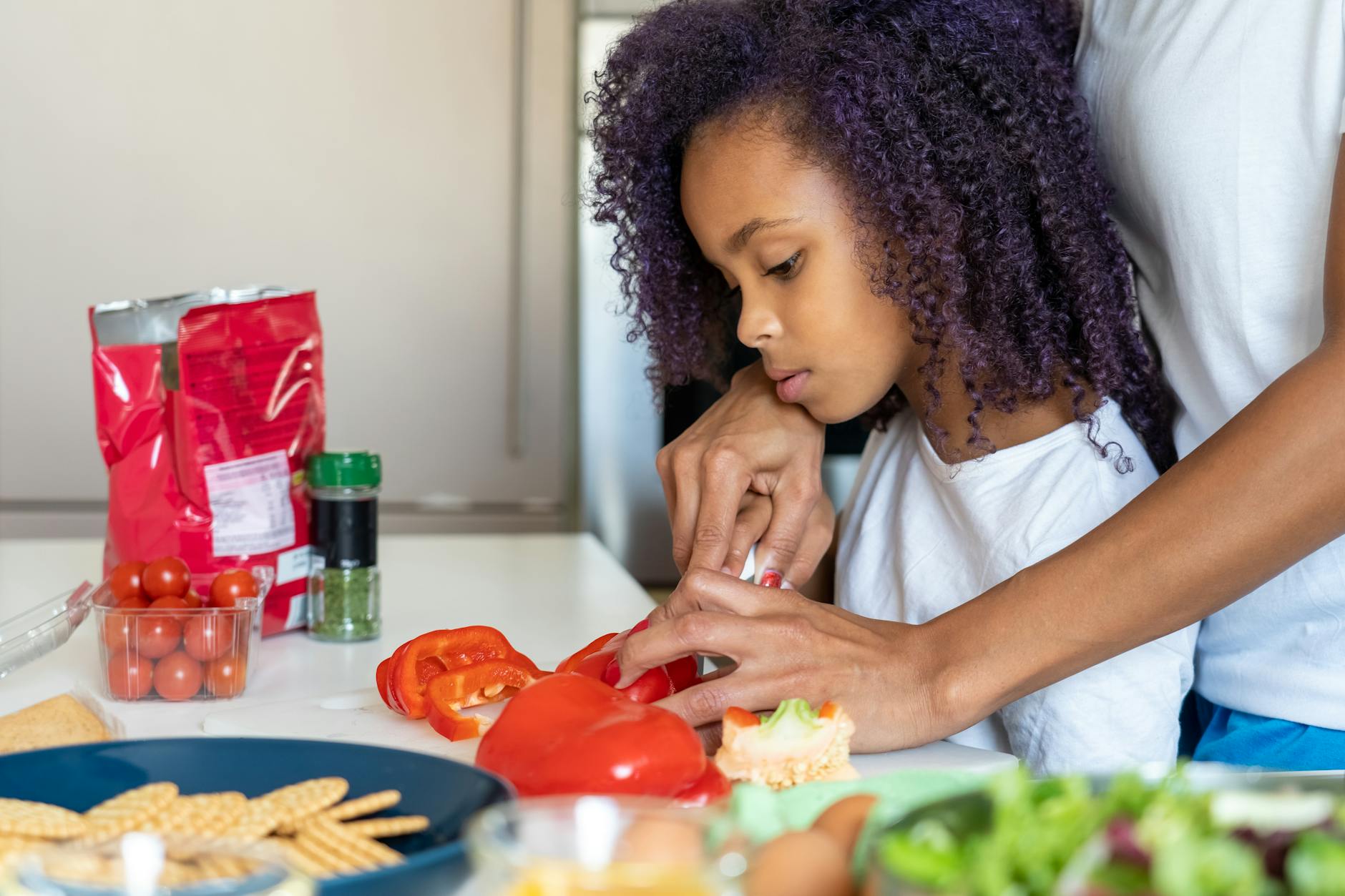
Older kids can even prepare simple (or elaborate!) meals.
My kids now look forward to helping me in the kitchen. One of my older child’s favourite things to make (and eat!) is quinoa and chickpea salad – as long as I boil the quinoa.
The younger one loves mixing eggs for omelets and baking cookies with me.
3) Prep a Few Basics Ahead of Time
Batch prepping a few basics early in the week can be a lifesaver. Even 30 minutes can set you up for smoother days ahead. You don’t need to prep the whole week – just a little can go a long way.
Family-friendly prep ideas:
- Chop a rainbow of veggies and store in containers for easy grab-and-go
- Hard boil eggs for a quick protein source
- Make overnight oats or mini muffins for fast breakfasts
- Prep a batch of pasta salad or grain bowls for lunch
- Freeze smoothie packs or banana muffins for busy mornings

Tip: Choose 1–2 prep tasks that make your week easier – even small steps help.
Storing prepped food safely:
- If you plan to use it within 2–3 days, store prepped food in the fridge.
- For larger batches or meals you won’t use right away, portion and freeze them. Freezing in smaller containers makes it easier to defrost just what you need.
Food safety reminder:
Cooked food should be refrigerated within 2 hours and eaten within 2 to 3 days. Reheat leftovers to at least 74°C (165°F). Frozen meals are best used within 2–3 months for best quality and safety.
Here’s a link from Health Canada about how to properly store leftovers.
4) Keep Water Handy and Fun
In the summer heat, staying hydrated is just as important as eating well – especially with all the outdoor play.
💧 Try this:
- Keep reusable water bottles filled and easy to grab
- Add fruit slices or mint to water for a fun twist
- Offer milk or fortified plant-based drinks for extra nutrients
- Limit sugary drinks, which can affect appetite and energy
Health Canada recommends water as the main drink for children. Milk or fortified plant alternatives can also help meet calcium and vitamin D needs.

5) Be Realistic – There’s No Such Thing as Perfect
Not every day will go perfectly – and that’s okay. Some days might be simple sandwiches for dinner or whatever’s in the freezer. That’s real life.
Healthy eating isn’t about perfection. It’s about making the best choices you can with what you have, most of the time. Focus on small, steady habits and keep things manageable for your family.
In Summary
Healthy eating during summer doesn’t have to be complicated or time-consuming. With some planning, a (flexible) routine, and kid-friendly strategies, you can help your family stay nourished and save yourself some stress.
And don’t forget – sharing meals together as a family is one of the best ways to support healthy habits and connection.
Need more support with family meals or snack planning?
Reach out for a personalized consultation. I’m here to help.
 Nourish to Thrive RD