
A South Asian Perspective
In our South Asian community, digestive issues like gas, bloating, and ‘pet mein jalan’ or ‘ghabrahat‘ can often be brushed off as “normal” or something we just live with. But what if these are signs of something more – something like Irritable Bowel Syndrome (IBS)?
So, What Is IBS?
IBS is a chronic condition that affects how the gut functions. It doesn’t damage the gut, but it causes real, ongoing symptoms. Some common IBS symptoms include:
- Abdominal pain or cramping
- Bloating or excess gas
- Diarrhea, constipation – or both
- Feeling like your bowel hasn’t fully emptied
Unlike the occasional upset stomach, IBS tends to come and go over time, and can be influenced by stress, travel, or certain foods.
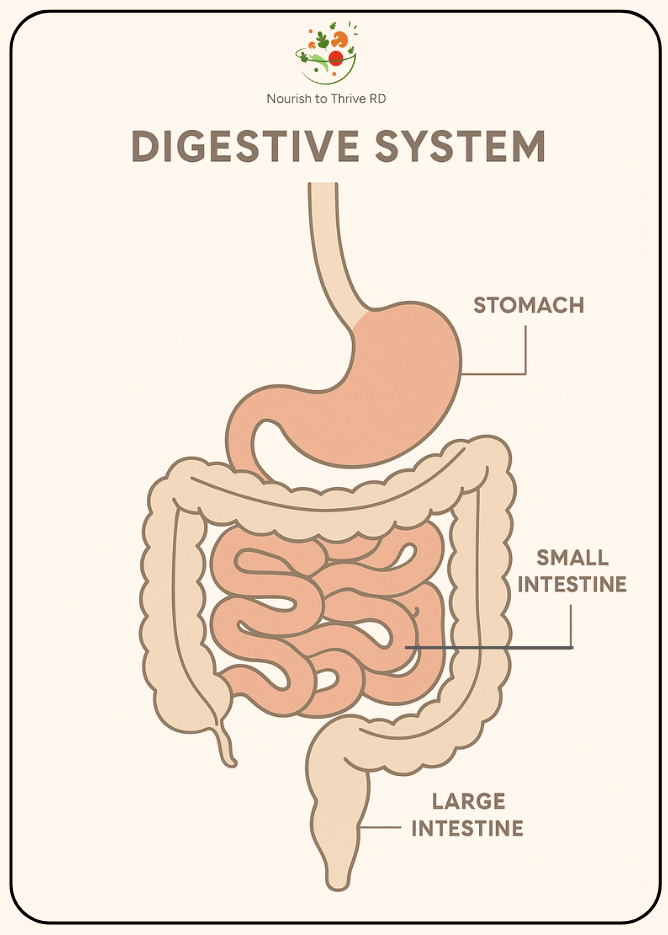
IBS mainly affects the large intestine (colon), but symptoms can also involve the small intestine. This is why many people experience bloating, gas, and cramping in the belly area. These symptoms happen because the gut isn’t functioning smoothly – even though it may look completely normal on scans or tests.
What I’m Hearing from the Community
In just the past month, I’ve spoken to a few senior South Asian women here in BC who were recently told they have IBS. Many of them follow vegetarian diets and now feel confused and frustrated:
“Doctor ne bola IBS hai, par ab kya khaayein samajh hi nahi aata.”
(“The doctor said it’s IBS, but now I have no idea what to eat.”)
Without much guidance or direction, some begin cutting out more and more foods, afraid of making symptoms worse. As a result, they start losing weight, and their nutritional health suffers. This is more common than we realize. Also, vegetarian diets can make food choices trickier without guidance – especially when many high-fiber foods such as legumes are common triggers.
How Is IBS Diagnosed?
IBS is diagnosed based on your symptoms – not through blood tests or imaging. If your symptoms match certain criteria and there are no “red flags,” your doctor may be able to make the diagnosis without extensive testing.
Doctors often use something called the Rome IV criteria, which focus on ongoing abdominal pain and changes in bowel habits.
However, your doctor may recommend more testing to rule out other conditions if you have any of the following warning signs:
- Unexplained weight loss
- Blood in the stool
- A family history of IBD, celiac disease, or colon cancer
- Symptoms that wake you up at night
These signs don’t automatically mean something serious is going on – but they do need to be checked out, just to be safe and to rule out conditions like celiac disease or inflammatory bowel disease (IBD).
You’re Not Alone
IBS can feel isolating, making you wonder: “Mujhe hi kyun hota hai?” (“Why does this only happen to me?”) But the truth is, it’s a very common condition in Canada, affecting about 18% of the population. That means millions of Canadians, including those of us born and raised here, live with IBS. In fact, the lifetime risk of developing IBS in Canada is around 30%.
The early challenges of immigration like dietary changes, stress, or lifestyle shifts can play a role for some. But even beyond that, our changing food patterns, work-life pressures, and cultural expectations can all contribute to IBS symptoms.
Most people in Canada are diagnosed with IBS in their late teens to early 40s, and the symptoms can be disruptive – leading to missed work, school, or social events.
Sometimes, in our culture, we might feel hesitant to talk about these issues – but knowing how common IBS is can help open up these important conversations and encourage us to seek support.
What Can Help?
If you’ve been diagnosed with IBS but feel overwhelmed or aren’t sure what to eat – especially if you’re trying to maintain a vegetarian or South Asian diet – you don’t have to figure it out alone. Support from a dietitian who understands both gut health and South Asian food culture can make a big difference in how you feel, eat, and live. Feel free to reach out.
Want to learn more? Check out my detailed post: Understanding IBS.
 Nourish to Thrive RD